
Ceramic Braces vs Invisible Aligners

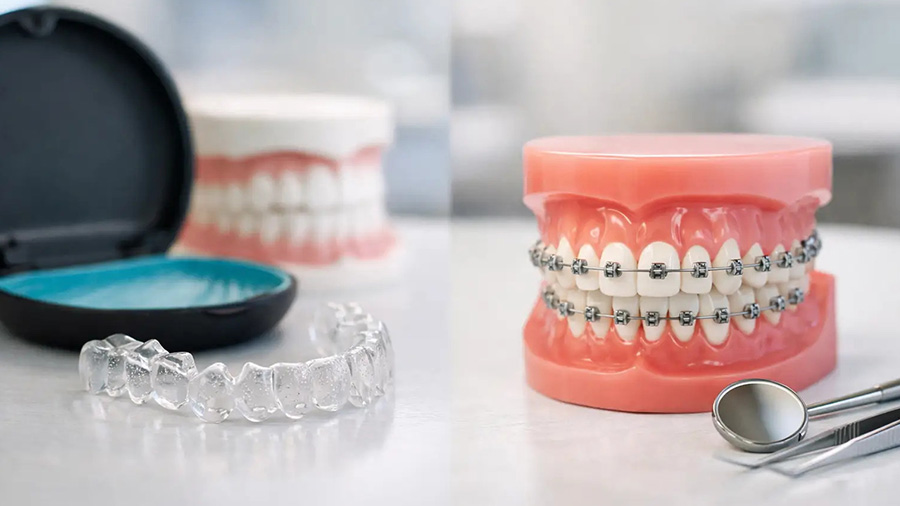
Ceramic Braces vs Invisible Aligners: Which Is Right for You?
By the orthodontic team at Ministry of Smile, Sector 49, Gurugram
If you’ve decided to straighten your teeth but don’t want a mouth full of metal, you’ve probably narrowed it down to two options: ceramic braces or invisible aligners like Invisalign. Both are far more discreet than traditional braces, and both can give you a beautifully aligned smile. But they work very differently, and the right choice depends on your teeth, your lifestyle and your budget.
For many of our patients in Gurgaon, the decision comes down to daily life. A consultant on back-to-back client calls in Cyber City, a college student in Sector 56, a parent planning treatment for a teenager, or someone getting ready for a wedding next year will each weigh things differently. This guide compares ceramic braces and invisible aligners side by side so you can make an informed choice.
What are ceramic braces?
Ceramic braces work exactly like traditional metal braces, with brackets bonded to each tooth and connected by an archwire. The difference is that the brackets are made of tooth-coloured or clear ceramic, so they blend in with your teeth. Tooth-coloured or clear wires and ties can make them even less noticeable.
Because they are fixed in place and adjusted by your orthodontist at regular visits, ceramic braces work around the clock and don’t depend on you remembering to wear them. Learn more about all our orthodontic braces options in Gurgaon.
Pros:
- Much less visible than metal braces.
- Effective for mild to severe and complex cases, including significant rotations and bite correction.
- Work 24/7 with no need to remember to wear anything.
- Usually more affordable than branded aligners.
Cons:
- Still visible up close, especially in photos and on video calls.
- Food restrictions: hard, sticky and chewy foods can damage brackets.
- Brushing and flossing around brackets takes extra time.
- Elastic ties can stain with frequent tea, coffee, turmeric-rich curries or smoking until they are changed at the next visit.
- Brackets and wires may irritate cheeks and lips for the first few weeks.
What are invisible aligners?
Invisible aligners are a series of custom-made, transparent plastic trays that fit snugly over your teeth. Each set moves your teeth a small amount, and you switch to a new set every one to two weeks. Invisalign is the best-known brand, and there are other clear aligner systems as well.
Aligners are removable, so you take them out to eat, drink anything other than water, and brush. To work properly they need to be worn for around 20 to 22 hours a day. Read more about Invisalign and clear aligners at Ministry of Smile.
Pros:
- Practically invisible, ideal for professionals, public-facing roles and photos.
- Removable, so there are no food restrictions.
- Easy to brush and floss normally, which is better for gum health.
- Smooth plastic is usually more comfortable than brackets and wires.
- Fewer and shorter clinic visits, with a digital 3D preview of your final result before you start.
Cons:
- Results depend on discipline: forget to wear them and treatment slows or goes off track.
- Need to be removed for every meal and snack, then teeth brushed before putting them back.
- Easy to misplace or lose, and replacements add cost.
- Generally more expensive, especially branded systems like Invisalign.
- Some very complex cases may still be better treated with braces.
Ceramic braces vs invisible aligners at a glance
| Factor | Ceramic braces | Invisible aligners |
|---|---|---|
| Visibility | Low, tooth-coloured but visible up close | Very low, almost invisible |
| Removable | No, fixed | Yes |
| Daily wear needed | Automatic, 24/7 | 20–22 hours a day, patient-dependent |
| Comfort | Initial irritation from brackets and wires | Smooth; pressure when switching trays |
| Food restrictions | Avoid hard, sticky and chewy foods | None, remove to eat |
| Oral hygiene | More effort around brackets | Brush and floss as usual |
| Complex cases | Excellent for mild to severe cases | Great for mild to moderate; many complex cases possible with attachments |
| Typical treatment time | 12–24 months | 6–18 months |
| Clinic visits | Every 4–6 weeks for adjustments | Every 6–10 weeks for progress checks |
| Staining | Elastic ties may stain | Trays can stain if you drink tea or coffee with them in |
| Relative cost | Lower | Higher |
A closer look at the key differences
Appearance and confidence
Both options are discreet, but aligners win on invisibility. If you’re regularly presenting, meeting clients, on camera, or simply self-conscious, aligners let you straighten your teeth without anyone noticing. Ceramic braces are a big step up from metal and look subtle from a normal speaking distance, but they will show in close-up photos.
Effectiveness for your specific case
For crowding, spacing and mild to moderate bite issues, both options achieve excellent results. For severe rotations, significant bite problems or teeth that need to move vertically a lot, fixed braces often give the orthodontist more control. Aligner technology has improved enormously, and small tooth-coloured attachments now allow many complex movements, but the final call should come from an orthodontic examination and 3D scan.
Discipline and lifestyle
This is the factor people underestimate most. Aligners only work when they’re in your mouth. If you snack frequently through the day, travel a lot, or know you might forget, braces may actually give you a faster, more predictable result. On the other hand, if you’re organised and want freedom to eat anything, including chole bhature and a weekend of wedding food, aligners fit easily into your routine.
Comfort
Both cause some pressure as teeth move, usually for a day or two after an adjustment or a new tray. Braces can also cause sores on the cheeks and lips early on, which orthodontic wax helps with. Aligners are generally more comfortable day to day.
Oral hygiene and gum health
Brackets create extra places for plaque to hide, so braces need careful brushing, interdental brushes and regular professional cleaning. Aligners let you clean normally. Either way, gentle Air-Flow teeth cleaning during treatment helps keep teeth and gums healthy.
Ceramic braces vs invisible aligners cost in Gurgaon
Cost depends on how complex your case is, how long treatment will take, and, for aligners, which brand and how many trays you need. Here are indicative ranges to help you plan.
| Treatment | Indicative cost in Gurgaon |
|---|---|
| Ceramic braces (full treatment) | ₹40,000 – ₹90,000 |
| Self-ligating ceramic braces | ₹60,000 – ₹1,20,000 |
| Clear aligners (other brands, full treatment) | ₹80,000 – ₹2,00,000 |
| Invisalign (full treatment) | ₹1,50,000 – ₹3,50,000 |
| Retainers after treatment | ₹5,000 – ₹15,000 |
Always ask whether your quote includes scans, all trays or adjustments, refinements and retainers. For a detailed breakdown of aligner pricing, read our guide to Invisalign cost in Gurgaon.
Who should choose which?
Ceramic braces may suit you best if:
- You have a complex case with severe crowding, rotations or bite issues.
- You want a discreet option at a lower cost than aligners.
- You’d rather not rely on remembering to wear something.
- You’re treating a teenager who may not wear aligners consistently.
Invisible aligners may suit you best if:
- You’re a working professional who wants treatment to be virtually unnoticeable.
- You have mild to moderate crowding, gaps or relapse after old braces.
- You want no food restrictions and easy brushing.
- You’re disciplined enough to wear them 20–22 hours a day.
- You travel often and prefer fewer clinic visits.
Still unsure? That’s normal. The right choice becomes much clearer once an orthodontist has examined your teeth and shown you a 3D simulation. If you’re considering braces for your child, visit our kids dentistry page too.
What treatment looks like at Ministry of Smile
- Consultation and examination. We check your teeth, gums and bite, and take a digital OPG or CBCT scan where needed.
- 3D digital scan. Instead of messy impressions, our iTero 5D scanner creates a precise 3D model of your teeth in minutes.
- Preview your result. For aligners, you can see a simulation of how your teeth will move and your final smile before committing.
- Start treatment. Braces are fitted in a single comfortable visit, or you receive your first sets of aligners with clear wear-and-care instructions.
- Regular reviews. We monitor progress and adjust braces or issue new aligners as planned.
- Retention. Once your teeth are aligned, retainers keep them in their new position. This step is essential for any orthodontic treatment.
Why Gurgaon patients choose Ministry of Smile for orthodontic treatment
Ministry of Smile is a multispecialty dental clinic at 122, Eros City Square, Rosewood City Road, Sector 49, Gurugram, convenient for patients from Sohna Road, Nirvana Country, South City II, Sushant Lok and Golf Course Extension Road.
- Both options under one roof: ceramic braces, metal braces, Invisalign and other clear aligners, so your recommendation is based on your teeth, not on what the clinic happens to offer.
- Specialist team: orthodontists work alongside periodontists and cosmetic dentists, with gum health overseen by periodontist Dr. Prateek Gupta.
- Digital planning: iTero 5D scanning, digital OPG and CBCT in-house.
- Smile makeover options: combine alignment with teeth whitening, gummy smile correction or veneers for a complete smile makeover.
- Trusted by families: strong Google reviews from Gurgaon patients, including parents who chose us for their children’s braces.
You can also read our guide on choosing the best dental clinic for Invisalign in Gurgaon, or see real results in our smile gallery.
Frequently asked questions: ceramic braces vs invisible aligners
Which is faster, ceramic braces or aligners?
For mild to moderate cases, aligners are often as fast or faster, typically 6 to 18 months, provided they are worn 20 to 22 hours a day. For complex cases, braces may finish sooner because they work continuously and allow more control.
Do ceramic braces stain?
The ceramic brackets themselves resist staining, but the elastic ties that hold the wire can discolour with tea, coffee, turmeric and smoking. They are replaced at each adjustment visit, usually every four to six weeks.
Are invisible aligners really invisible?
They are very close. Most people won’t notice them in normal conversation. Small tooth-coloured attachments may be bonded to some teeth to help movement, but these are also very discreet.
Can adults get braces or aligners?
Absolutely. There is no upper age limit for orthodontic treatment as long as your teeth and gums are healthy. Many of our patients start treatment in their 30s, 40s and beyond.
Will I need a retainer after treatment?
Yes. Teeth naturally try to drift back after any orthodontic treatment. Wearing a retainer as advised, often every night long term, protects your results.
How do I book an orthodontic consultation in Gurgaon?
You can book an appointment online, call +91-98731 71041, or email ministryofsmiledental@gmail.com.
Not sure which one is right for you?
Visit Ministry of Smile for an orthodontic consultation and 3D scan. We’ll show you what each option can achieve for your teeth, how long it will take, and what it will cost, so you can choose with confidence.
Book your braces and aligners consultation or call +91-98731 71041.
Disclaimer: This article is for general information and does not replace a clinical consultation. Treatment suitability, timelines and costs vary from person to person and are confirmed after examination.
Related posts


Popular Posts

Ceramic Braces vs Invisible Aligners

Best Questions to Ask a Dental Implantologist Before Implant Treatment